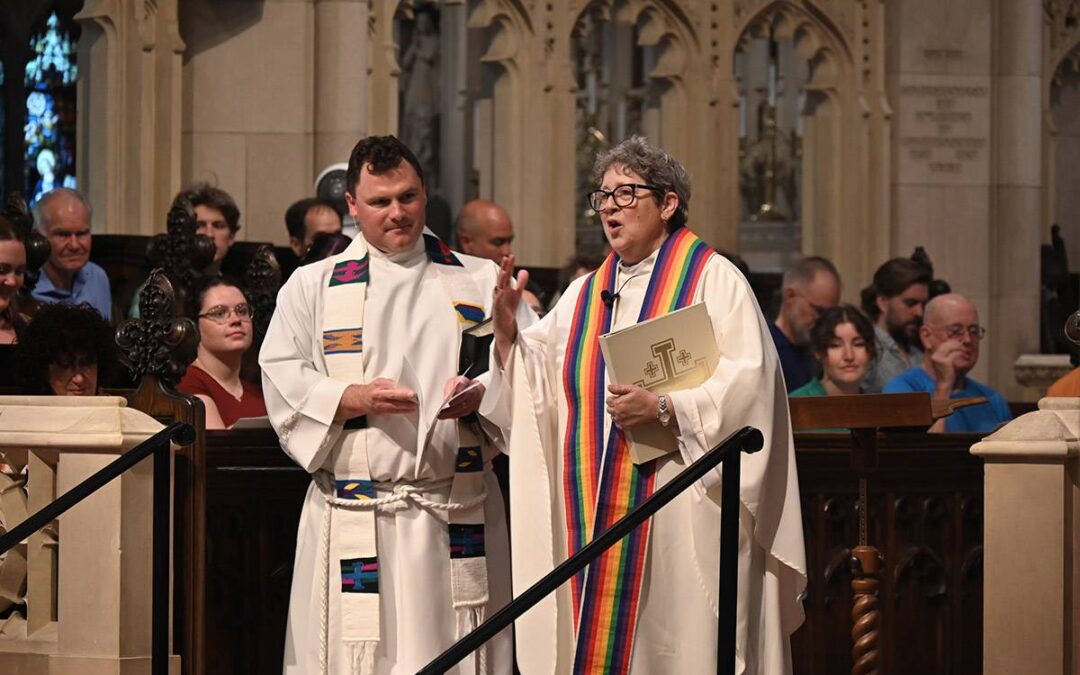

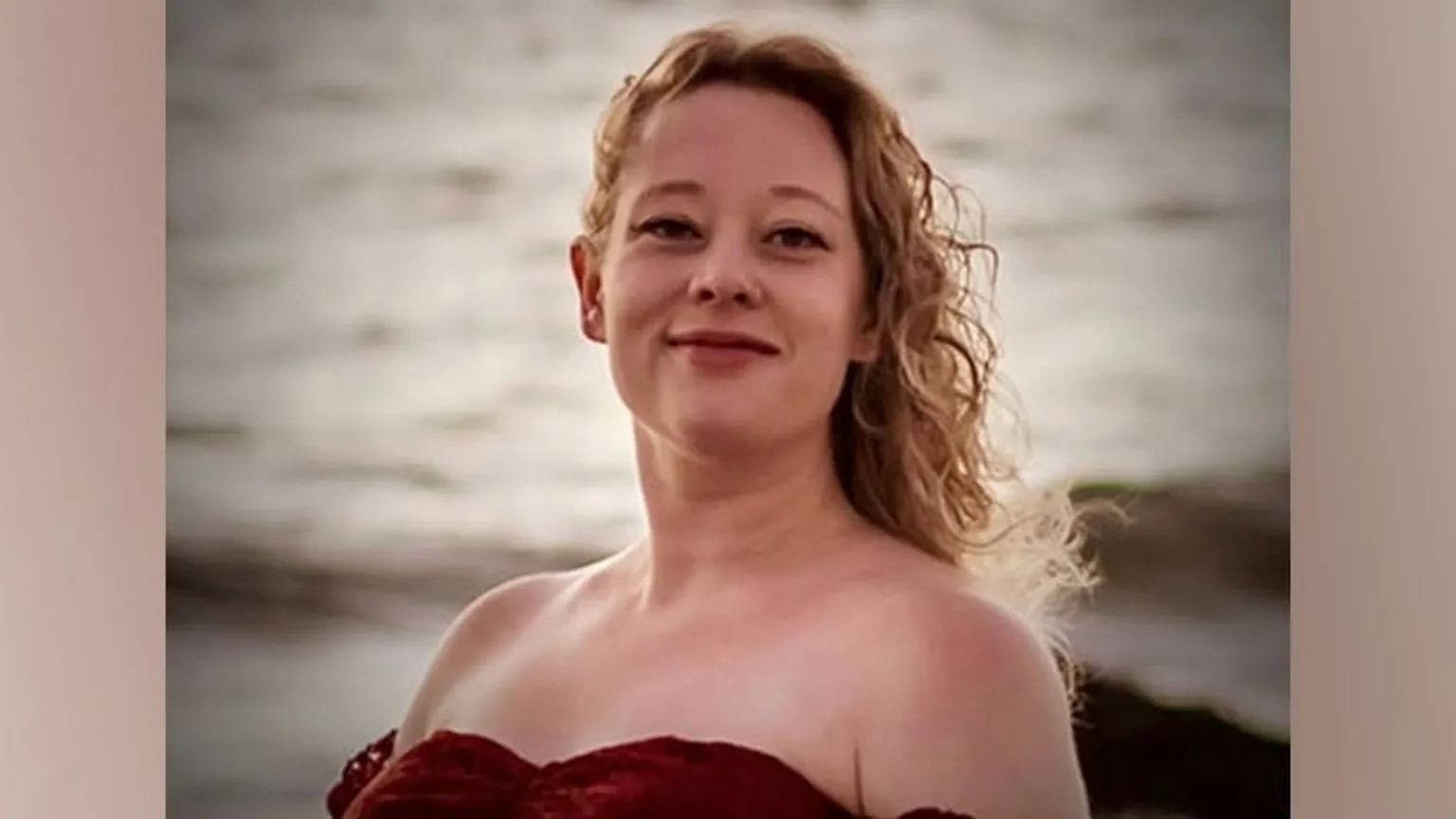
Our monthly Queer Theology discussion groups are a parishioner led opportunity devoted to exploring queer theology more deeply, and how members of the LGBTQIA+ community are not just accepted in the Episcopal Church but embraced in God’s love. We ask ourselves: How does the queer perspective enrich queer theology and our community? This month we reflected on a variety of readings as planned, but also added in framing and discussion around the killing of Old Dominion Graduate Renee Good, this week, and the Christian faith of love and kindness that guided her as a queer Christian.
“We reflected on how powerful Renee’s final words of “I’m not mad at you” were, and how similar they were to Jesus’s words on the cross.”
We began the meeting reading all of Acts 10 out loud and then discussed what we heard and noticed in the reading from the lens of Queer Theology — both considering the perspective of Queer Theology providing a new “queer” way to reimagine texts and as Queer “apologetics” as we read the Bible and engage with our faith to specifically see what the Bible and our faith says to LGBTQ people. The conversation on this got started looking at the language of clean versus unclean, and how often Queer people are excluded from Christian faith and spaces due to being perceived or depicted as being “profane and unclean” and yet Acts 10 clearly says that “What God has made clean, you must not call profane,” and LGBTQ people are made by God.
We also considered what the Gender Studies academic and theologian, Joseph Goh, wrote in an article about the chapter, specifically that, “Acts 10 explodes with so many layers of meaning for me beyond the usual interpretation of God’s desire for the message of Christ to go beyond the Jewish people and find a home in the Gentile community. What would happen, I wonder, if I concentrated on reading Acts 10 as a pertemuan dua dunia or meeting of two worlds? What if I envision the chapter not merely as a Gentile person’s desire for God’s acceptance in Christ through the mediation of a Jewish/Christian person, but as an awkward meeting of two realities? What if I reimagine the identities of the main characters of this chapter? What would such a queer approach yield?”
In this, we discussed the thought experiment of imagining Peter in Acts 10 as the Queer Christian, and Cornelius as: “a devout and prayerful Gentile who loves God in accordance with the Jewish tradition, but he has now been instructed by an angel of God to do something outside of his comfort zone: to send for Peter who can bring his faith to the next level. He reminds me of the numerous upright and God-fearing non-affirming churches that are deeply and genuinely invested in God.”
We considered the power of approaching other people’s fear and ignorance with love and in conversation, and in this, we pivoted the discussion to Renee Good. What if Renee Good’s killer had embraced love and curiosity rather than fear? And we reflected on how powerful Renee’s final words of “I’m not mad at you” were, and how similar they were to Jesus’s words on the cross.
In discussing Renee, we considered her as a Queer Christian, based in part from from her wife’s statement about Renee, that: “Renee lived by an overarching belief: there is kindness in the world and we need to do everything we can to find it where it resides and nurture it where it needs to grow. Renee was a Christian who knew that all religions teach the same essential truth: we are here to love each other, care for each other, and keep each other safe and whole.”
We also listened to Heather Weddington’s rememberance of Renee at the Norfolk vigil for Renee on Friday night. Heather is a dear friend of mine, and we both teach in the ODU English Department, where she taught Renee in her Intro to Creative Writing class.She finished with reading Renee’s award-winning poem, “On Learning to Dissect Fetal Pigs.” I’ve included a YouTube link to her remarks and her reading of the poem and you can watch that here.
We discussed the poem in the light of Queer Theology, focusing on the end of the poem, in which Renee responds to her earlier, more naive faith. In the beginning of her poem, she characterizes her response to her young faith through the image of, “the post-Baptism bibles, the ones plucked from street corners from the meaty hands of/ zealots, the dumbed-down, easy-to-read, parasitic kind).” Through the course of the poem, she then explores all that she is learning in biology class, and how, in the end, there is room for science in her faith. She ends the poem with:
now i can’t believe—
Renee good, “On Learning to Dissect Fetal Pigs.”
that the bible and qur’an and bhagavad gita are sliding long hairs behind my ear like mom used to & exhaling from their mouths “make room for wonder”—
all my understanding dribbles down the chin onto the chest & is summarized as:
life is merely
to ovum and sperm
and where those two meet
and how often and how well
and what dies there.”
In this, I see her refuting the “dumbed-down, easy-to read” Christian faith that is threatened by science. She pushes back against the ideas that science and knowledge need to be suppressed to “make room for wonder,” and that instead her poem celebrates there is room for wonder in the science, in the miracle of ovum and sperm and the connection and community that springs from this basic biology.
Renee Good’s faith seems to me a mature faith, one that was founded on the principles of love and love in action. She was the best of us.
I am grateful to be part of my Christian community and my Queer community. As much as we might want to respond to hate with hate, respond to violence with violence, through the strength that I gain from my community, and from our faith and our God, I choose to instead follow Jesus in his actions of radical love and non-violence and to follow Renee Good in forgiving and loving those that hated her. As Father Noah preached on Sunday in his sermon, we must choose to do the work of love. That seems to me the only way forward.
Interested in Queer Theology? For more information on our Queer Theology Discussion Group contact Anders Nolan. All LGBTQIA+ people and allies are welcome.