
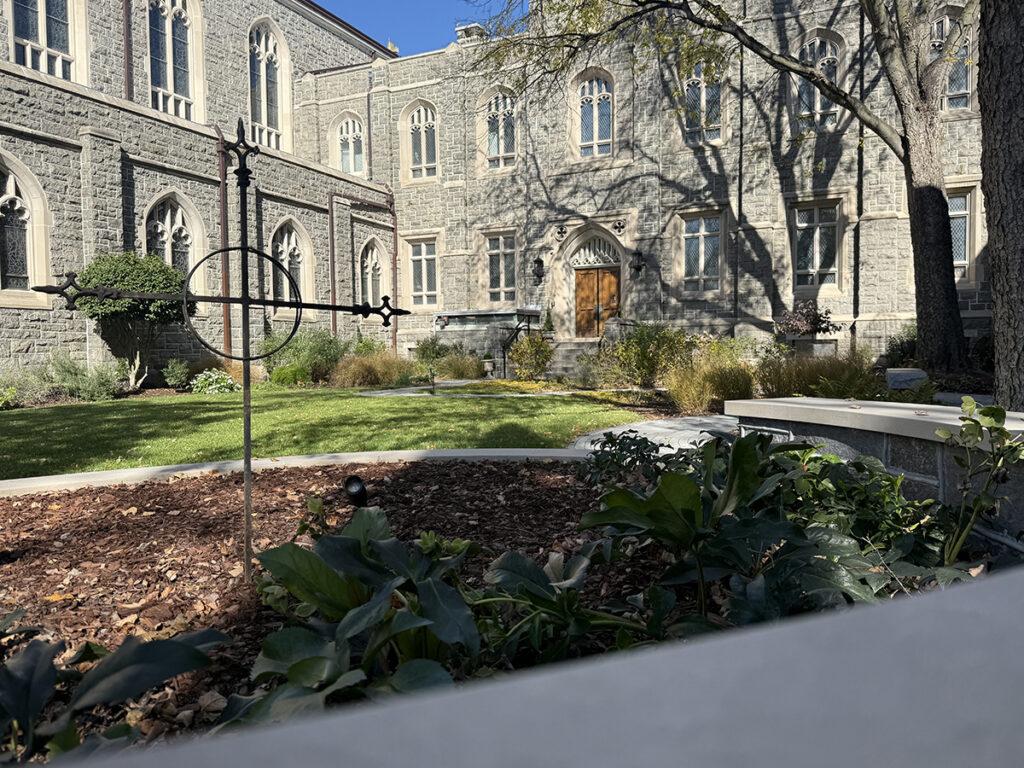
As the leaves drop and the days shorten, the natural world around us reminds us that life includes cycles of death and rebirth. It is no accident that the Church traditionally marks the Autumn Triduum at this time of year: All Hallows’ Eve, All Saints’ Day, and All Souls’ Day. Just as we celebrate the light of the Incarnation in the winter dark, and the Resurrection bursting forth in spring, autumn provides the stage for us to contemplate mortality. We know that the Christian faith is centered on overcoming death, transforming the cross from an instrument of shame into a symbol of victory and life.
This is why we recently gathered for our two “Grave Matters” sessions in November. They really were back by popular demand, which might sound a tad morbid. But we are delighted to know that our community is focused on the importance of proper planning in this regard. People who came to the sessions described them as so useful that we decided to write a blog about things to consider, to supplement the documentation available at our Christ & St. Luke’s Funerals page.
Facing and addressing matters of mortality, our own included, is incredibly important, difficult, and complicated. The essential message that emerged from the sessions, however, is hopeful and rooted in unconditional love and humility: Planning for your death is one of the greatest gifts of love you can give to the living. It’s also worth noting that this is something for everyone to consider at any time, even if it is unpleasant for you to think about. Death, after all, is one of the few certainties we can all plan for.
Those who have been through the death of a loved one without clear guidance can attest to the agony and frustration of trying to sort through thousands of decisions while deep in grief. By making plans, ahead of time, covering the liturgical, medical, legal, and financial questions, you set your loved ones up for success, allowing them to be fully present in a service that honors and celebrates your life.
If you’d like to watch video of these conversations, it is available on the Christ & St. Luke’s YouTube channel here:
Here are some of the key considerations and practical tips that emerged from our conversations:
Liturgical & Funeral Planning (Honoring Your Memory)
- Write your own obituary notes: This is an onerous task for someone else to take on while grieving. Help your loved ones by putting down notes ahead of time that communicate what was truly important to you.
- Decide on interment: Have you decided where and how you will be buried? Attending to this ahead of time is a great gift.
- At Christ & St. Luke’s, we offer interment in the consecrated ground of our Memorial Garden. Ashes are poured directly into the sacred earth.
- Prepay and File: You can prepay fees associated with funeral services and interment options. Please file your wishes with the church office.
- Choose service details: Decisions that are confusing for loved ones can be sorted out now:
- Rite I or Rite II: Decide between the traditional “thees and thous” (Rite I) or contemporary (Rite II) language.
- Eucharist (Communion) or not: Both are appropriate options. If you choose to have Holy Communion, you must include a reading from the Gospel.
- Keep the music sacred and balanced: Funerals follow the liturgy; they are not concerts! While music is vital, please limit the selections (two to three hymns work well) to sacred music. Save the favorite secular playlist for the reception.
- Limit eulogies: To ensure attendees can fully engage in the totality of the service, we prefer one to two eulogists, speaking for no more than five minutes each.
- Location and timing: Christ & St. Luke’s prefers to hold services late morning (around 11:00 a.m.) on a Friday (or possibly a Saturday), allowing for a transition to a lunch reception elsewhere. Funeral receptions generally cannot be hosted in our new building due to space constraints.
Medical & Communication Planning
- Start with values, not procedures: Use resources like The Conversation Project guide. Start by asking: What matters to you in your life? This helps transition into what matters to you at the end of life (e.g., wanting to die at home might be rooted in the value of quiet comfort).
- Schedule the conversation: Do not wait for the perfect, spontaneous moment. Making these difficult, sensitive decisions is only half the work; the other, equally vital half is communicating these wishes to those who need to know.
- Choose your healthcare proxy carefully: Select a person who understands your wishes for end-of-life care (such as intubation, resuscitation,) and, crucially, someone you believe will follow through with those wishes, even if it is difficult for them emotionally.
- Clergy role: Please note that clergy cannot serve as your health care proxy or executor of your will.
- Easy access to directives: If you have Advanced Medical Directives (like a “Do Not Resuscitate” or “DNR” order), ensure the documents are easily accessible —such as placing them on the refrigerator — so EMTs can see them immediately.
Legal & Financial Planning (Digital and Physical Assets)
- Get professional help: Engaging a legal professional like a trust and estates lawyer is highly recommended for creating documents like a will, appointing an executor, and establishing a General Durable Power of Attorney. This work is for anyone who owns possessions, not just the wealthy.
- List your digital life: In our modern age, one of the most agonizing tasks for loved ones is gaining access to a person’s digital accounts. Be sure to keep a readily accessible (but not too accessible, for obvious reasons!) list of passwords for your computer, phone, and online bank accounts.
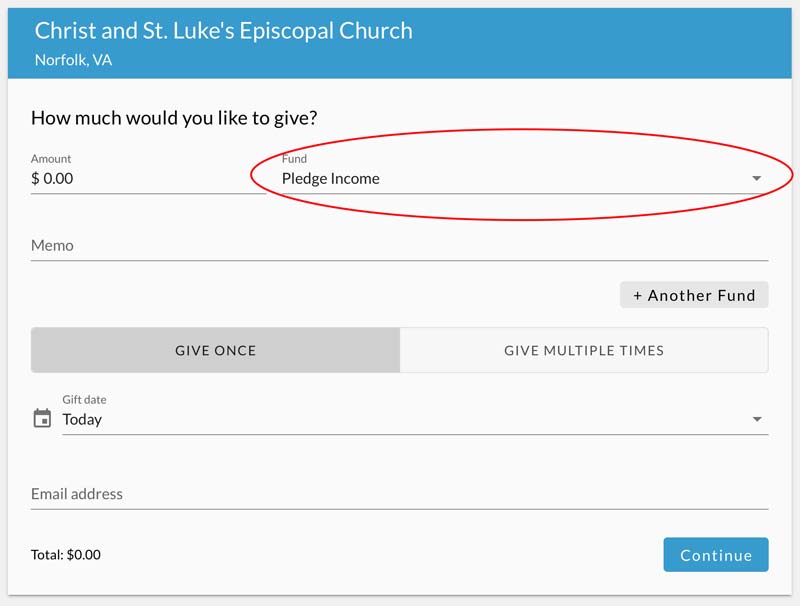
- Consider planned giving: We encourage you to remember Christ & St. Luke’s in your will, securing your legacy in the mission of the church.
- Unrestricted gifts: These are the most helpful, allowing the Vestry and Finance Committee to direct funds to the area of greatest need for the parish’s flourishing, be it relieving pressure on the operating budget or capital expenses.
- Endowments vs. funds: Endowments are invested permanently, with only 4% of any annual interest feeding into the church’s budget. Funds are spent down over time for specific purposes.
The Christian tradition reminds us that, even at the end of life, we can behave in a faithful manner. Making these plans is a profound way to ensure that the peace and comfort you seek for yourself are extended, as a lasting blessing, to the loved ones you leave behind.
Do you have your end-of-life choices on file with the church? If not, you may contact the church office to ensure your decisions regarding funeral services, readings, and music are adhered to.