

Our December Rector’s Book Club provided a rich opportunity to explore Hannah Anderson’s Advent devotional, Heaven and Nature Sing. Named after the beloved hymn by Isaac Watts, the book invites us to witness the weird and wonderful collision of eternity and our time-bound existence. The group engaged deeply with Anderson’s artful blend of personal anecdotes and scriptural analysis, finding fresh ways to read familiar stories from the Gospels and beyond.
A major point of discussion was the concept of sanctification, the process of making something holy. Drawing on Anderson’s use of Elizabeth Barrett Browning’s imagery, that “Earth is crammed with heaven and every common bush afire with God,” the group debated the language of daily encounters with the divine. One participant suggested that the term “mundane” often carries a negative weight, proposing that we instead use “everyday” to describe how the sacred is integrated into our normal activities. We talked about how the rituals we keep, whether in family traditions or through church liturgy, start to shape us and get in deep over time.
“This sparked a conversation about our human relationship with silence and the deep stuff that happens when we are forced to get comfortable with our own thoughts.”
The group spent time discussing Anderson’s reference to the story of Zechariah, John the Baptist’s father, whose temporary loss of voice is often interpreted as a punishment for doubt. He loses his voice in Luke 1:18-25 after doubting the Archangel Gabriel’s message that his elderly wife, Elizabeth, would bear a son. The discussion reframed this supposed punishment as an “invitation to learn again how to listen and see and believe”. This sparked a conversation about our human relationship with silence and the deep stuff that happens when we are forced to get comfortable with our own thoughts.
Several participants shared powerful personal stories regarding the discipline of quiet: One member shared an experience of spending four years in silence while serving as a monk, noting that while it was a beautiful practice, “not everybody is called to cloistered life.” Another participant described her time as a sister within another cloistered community where silence was strictly enforced at the dinner table, requiring the use of symbols just to ask for the salt. A parent reflected on the need to set an alarm specifically to have one hour of quiet before their children woke up, just “literally, to have like 45 minutes of just nothing.” Another parent spoke about the “nourishing” silence of their minimally verbal, autistic son, whom they described as “wise beyond his years… and very inspiring.” It was also agreed that we often avoid silence because we are avoiding something within ourselves that we don’t want to hear.
Anderson’s reflections on her family’s land in the Virginia mountains also highlighted a unique relationship with home for our parish: Many at Christ & St. Luke’s come from military backgrounds where claiming a hometown is a deliberate choice. One member shared their unique identity as a “wanderer” from their Naval career, where they were taught to say, when asked where they were from, “I was born on the crest of a wave and rocked in the cradle of the deep.”
Another member, reflecting on the bittersweet nature of life’s transitions through the lens of Anderson’s book, said “the trouble with being human is every step towards something is a step away from something else.”
The discussion concluded with a focus on the visible and invisible worlds, using Anderson’s imagery of angels and microscopes. A reminder that “just because I can’t see it there doesn’t mean that it’s really not there.” The consensus was that we must grow comfortable with mystery rather than seeking mastery. One participant, a retired doctor, shared that they frequently had to tell patients, “I don’t know,” emphasizing that embracing mystery requires a level of humility that allows the door to faith to stay open.
If you want to join us to talk about reading more books in the New Year, we have an exciting lineup of books coming up:
- January 23 at 4 p.m.: “Being Disciples” by Rowan Williams. The former Archbishop of Canterbury offers a short but theologically hefty look at what it means to live as a follower of Christ in the modern world.
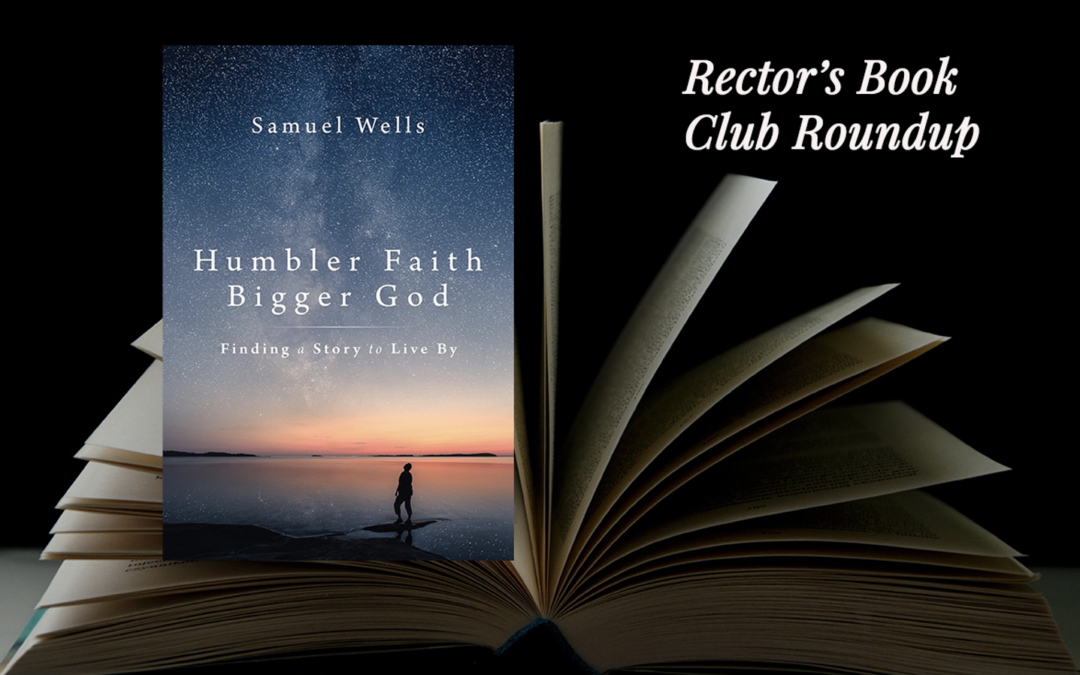
- February 27 at 4 p.m.: “Humbler Faith, Bigger God” by Sam Wells. Wells, the Vicar of St. Martin-in-the-Fields in London, takes the major criticisms of the Christian faith and offers a different, humbler story for us to live by.
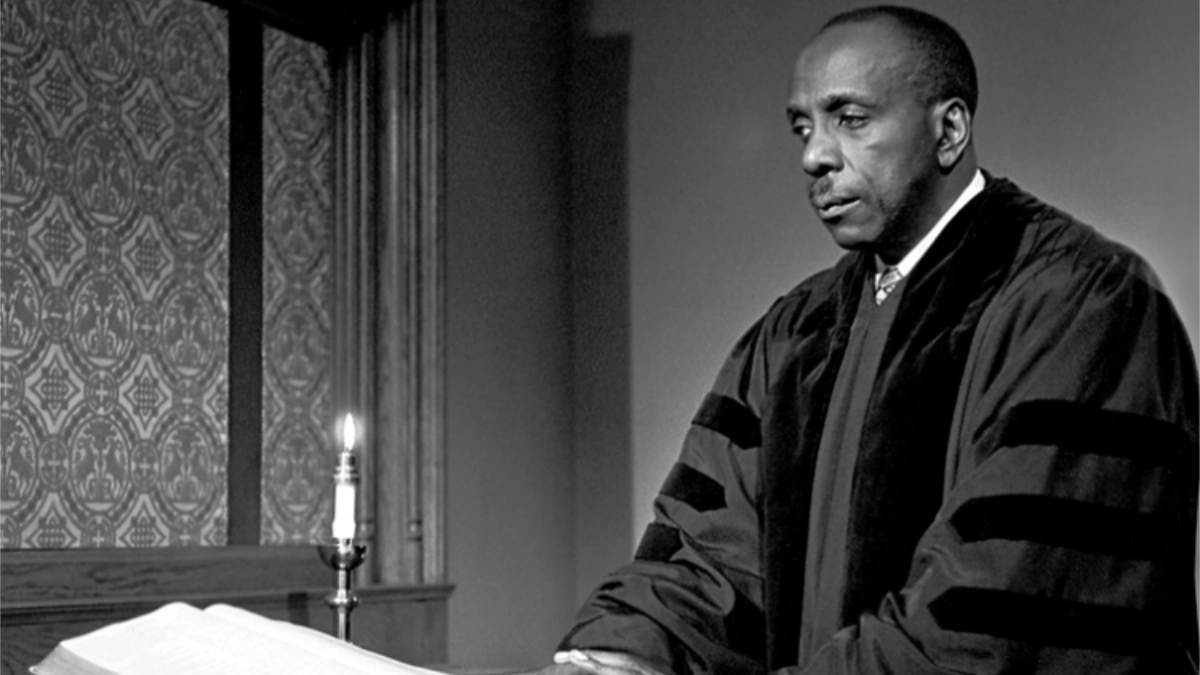
- March (Lenten Series): “Jesus and the Disinherited” by Howard Thurman. In place of our usual group, we will join our friends at Second Calvary Baptist Church for a collaborative Lenten study of this foundational text of the civil rights movement, famously carried by Dr. Martin Luther King Jr. during his advocacy for racial desegregation and racial justice in the 1960s. Stay tuned for more details.